The Flavors That Define the Jamaican Food Centennial
A centennial invites more than nostalgia. It asks what has endured, what has changed, and which flavors still feel essential after a hundred years of home cooking, roadside grilling, market trading, migration, and celebration. When people talk about a Jamaican food centennial, they are really talking about continuity under pressure. They are talking about dishes that survived colonial rule, economic shifts, urbanization, tourism, and the pull of overseas life, yet still arrive at the table with the same force they carried generations ago.
Jamaican food has never been a single note cuisine. It is layered, restless, and deeply place-based. Pepper heat matters, but so do smoke, thyme, scallion, pimento, ginger, coconut, citrus, allspice, cured salt, browned sugar, and the earthy starches that make a meal feel complete. What defines the food is not just ingredients, but a way of balancing intensity. A proper Jamaican plate can be fiery and comforting at once, rich but bright, humble yet unforgettable.
Over the years, I have found that the best way to understand Jamaican cooking is to pay attention to recurring flavor patterns rather than just to famous dishes. Jerk gets the headlines, and rightly so, but it is only one expression of a larger culinary language. The same is true of ackee and saltfish, curry goat, escovitch fish, rice and peas, mannish water, bammy, festival, and patty. Each dish says something distinct, yet they belong to the same conversation. If a Jamaican food centennial is meant to mark what truly defines the cuisine, then it starts with these core flavors and the techniques that carry them.
A cuisine built from memory and movement
Jamaican food reflects Indigenous knowledge, African technique, European influence, Indian indentureship, Chinese migration, and the practical improvisation of island life. That sentence can sound neat on the page, but in the kitchen it gets messier, and more interesting. A dish may borrow one cooking method, pair it with another community’s spices, and adapt again based on what is affordable in the market that week.
That is why Jamaican cooking resists narrow labels. It is not static heritage preserved under glass. It is living food that learned to make something memorable out of scarcity, local abundance, and movement between communities. Salt cod became central because preserved fish could travel and keep. Curry powders entered the island’s cooking and were localized with Scotch bonnet, thyme, and allspice. Breadfruit, once introduced, became so fully naturalized that many people cannot imagine the table without it roasted or fried.
A centennial frame helps reveal this history because it pushes us to ask which foods stayed relevant across changing decades. The answer is rarely the fanciest dish. More often, it is the food with staying power, the food that suits weekday breakfast, funeral repast, beach outing, street corner lunch, or Sunday family gathering. Jamaican cuisine has always had room for ceremony, but its genius lies in everyday depth.
The taste of fire, smoke, and pimento
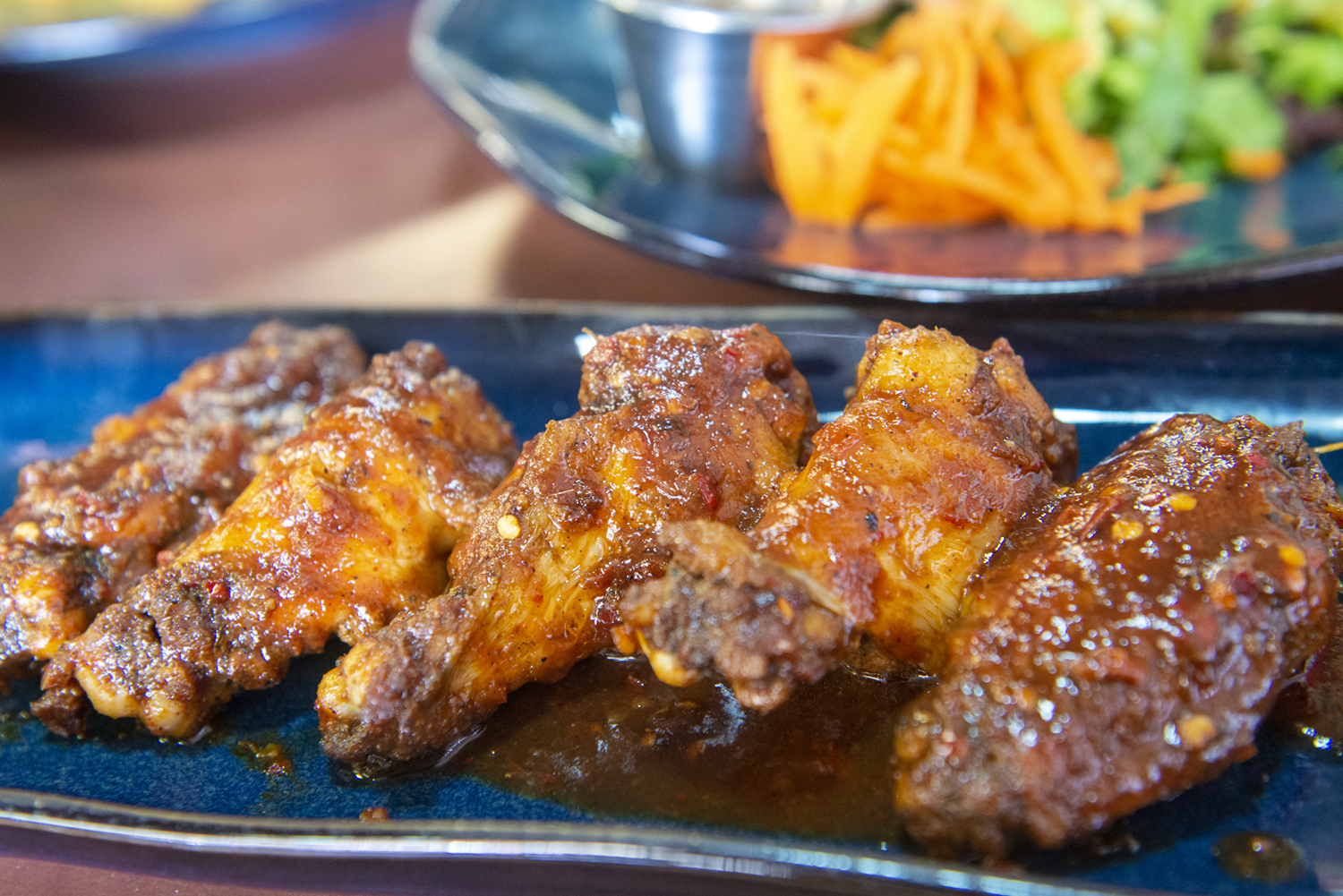
If one flavor profile stands at the center of the Jamaican imagination, it is jerk. Yet too much writing about jerk reduces it to heat alone. Heat matters, but jerk is really about a structured intensity built on pimento, thyme, scallion, ginger, garlic, and Scotch bonnet, often with touches of nutmeg, cinnamon, and brown sugar depending on the cook. More than seasoning, it is a method and an atmosphere.
Traditional jerk cooking depends on smoke, especially from pimento wood when available. That detail is not ornamental. The wood contributes a sweet, resinous aroma that rounds the sharp edges of pepper and spice. The meat, whether pork or chicken, benefits from slow exposure to heat rather than a rushed grill. Done properly, the outside darkens and firms while the interior stays juicy. The best jerk has contrast. First comes smoke, then herb, then warmth, then a peppery insistence that lingers.
Over the last few decades, commercial shortcuts have changed how many people encounter jerk. Bottled sauces can be decent, but they often flatten the flavor into sweetness and obvious heat. In a real jerk pit, flavor develops through time, fat rendering, smoke circulation, and the subtle bitterness that comes from char handled with control. That is why roadside jerk stands still draw loyal crowds. People are not only buying chicken. They are buying the memory of wood smoke and the discipline of the pit master who knows exactly when the meat has crossed from raw to fragrant without drying out.
For any discussion of the jamaican food centennial, jerk belongs near the front because it expresses both identity and adaptation. It is rooted in old practices, yet flexible enough to thrive everywhere from Portland to Kingston to London to Toronto. The technique travels, but the flavor still points home.
Salted fish, golden ackee, and the genius of contrast
Ackee and saltfish is often introduced to outsiders as Jamaica’s national dish, but that phrase can oversimplify what makes it meaningful. It is not just symbolic. It is delicious in a very particular way, and it reveals a lot about Jamaican taste. Ackee, when properly prepared, has a delicate, buttery texture that recalls soft scrambled egg to some people, though its flavor is milder and more vegetal. Saltfish brings salinity, chew, and depth. Onions, tomatoes, black pepper, Scotch bonnet, scallion, and thyme create lift around those two anchors.
The dish works because it handles contrast with restraint. Too much saltfish and the plate becomes harsh. Too much tomato and it turns watery. Too much ackee stirred too hard and the fruit breaks down into mush. Good cooks know the dish should look generous but not crowded. The ackee must hold its shape, the fish must be properly soaked and flaked, and the seasoning should perfume rather than drown.
Served with fried dumplings, boiled green banana, yam, or breadfruit, ackee and saltfish also shows another defining feature of Jamaican cuisine, the importance of starch as a partner rather than filler. The starches absorb oil, salt, and pepper. They complete the rhythm of the meal. Without them, the dish can feel unfinished.
There is a practical history here as well. Saltfish was durable, affordable relative to fresh catch in some periods, and suitable for households that knew how to stretch flavor. Ackee, once understood and safely handled, became an ideal local counterpart. Together they form one of the clearest examples of how Jamaican food turns necessity into elegance.
Curry that became fully Jamaican
Curry goat holds a special place at parties, weddings, holiday gatherings, and Sunday tables. It is one of those dishes that can perfume a yard from a distance. Although curry came to Jamaica through Indian influence, the version that developed on the island is unmistakably Jamaican. The seasoning profile usually leans on curry powder, garlic, scallion, thyme, Scotch bonnet, black pepper, and often all-purpose seasoning blends that vary by household. Browning may appear. Potatoes frequently join later, soaking up the gravy and mellowing the spice.
What makes Jamaican curry distinct is not just ingredient choice but texture and mood. The gravy should cling, not run. The goat should be tender, though not collapsed beyond recognition. A good pot carries warm spice rather than raw powder. You taste turmeric and coriander, yes, but also the brightness of fresh herbs and the slow-building heat of pepper.
There is a craft issue here that many inexperienced cooks miss. Goat rewards patient preparation. If rushed, it can stay stubbornly firm and slightly wild in aroma. If properly marinated and simmered, it becomes deep, savory, and luxurious. The same principle shows up throughout Jamaican cooking. Time is an ingredient. You cannot fake the flavor that comes from resting meat in seasoning overnight or letting a pot settle into itself over low heat.
In the context of a jamaican food centennial, curry goat matters because it demonstrates how imported techniques become local classics. It is not a museum piece borrowed from elsewhere. It has been absorbed, transformed, and claimed through repetition at family tables.
Escovitch and the island’s appetite for sharpness
Not every defining Jamaican flavor is heavy or smoky. Escovitch fish brings another crucial register, acidity. A freshly fried whole fish, often snapper when available, is topped with a hot pickle of vinegar, onions, jamaican food centennial carrots, pimento berries, and Scotch bonnet peppers. The fish stays crisp under the tangy topping, at least for a while, and the combination is startling when done well. Hot oil meets cool vinegar sharpness. Sweet carrot balances pepper. The fish itself remains central, not hidden.
This appetite for sharpness appears elsewhere in Jamaican cooking too. Lime or vinegar often enters dishes not to dominate, but to cut richness and wake the palate. After several bites of fried fish, bammy, and festival, that acidic note becomes essential. It resets the mouth. It keeps the meal lively.
Escovitch also speaks to Jamaica’s coastal life. Fish is not an abstract cultural symbol there. It is part of trade, local economy, seasonality, and regional habit. The treatment varies by parish and by access, but the instinct to pair fried seafood with something pickled and peppery has remarkable staying power. In practical terms, it also helps a fried dish travel better and taste vivid even after sitting a bit. Street food wisdom often hides inside what people call tradition.
Rice and peas, the quiet authority on the plate
It would be easy to spend pages on headline dishes and forget the item that appears beside them so often that some diners barely comment on it. Rice and peas is one of the defining flavors of Jamaican food precisely because it is so constant. The version many visitors meet uses kidney beans or gungo peas depending on the occasion and season, cooked with coconut milk, thyme, scallion, garlic, and Scotch bonnet, then simmered with rice until fragrant and cohesive.
The first thing that distinguishes proper rice and peas from jamaican food centennial generic bean rice is aroma. Coconut should be present but not sugary. Thyme should read clearly. The pepper often perfumes the pot without necessarily being burst open into full aggression. Texture matters too. The grains should stay separate enough to spoon cleanly, while still carrying the creaminess of the cooking liquid.
Rice and peas anchors the plate. It softens the edges of jerk, welcomes curry gravy, and complements stewed meats. It is not decorative. It is structural. In many homes, the quality of the rice and peas tells you a lot about the cook’s judgment. Too wet, and everything feels careless. Too dry, and the plate loses comfort. Too much coconut, and the balance tips.
When families gather for Sunday dinner, it is often the familiar supporting dishes that decide whether the meal feels right. That is one reason centennial conversations should not focus only on dramatic centerpieces. The cuisine’s identity lives just as strongly in its so-called sides.
Ground provisions and the flavor of sustenance
Jamaican food has always depended on a serious respect for starches and root crops. Yam, green banana, cassava, sweet potato, coco, dasheen, and breadfruit are not backup items. They carry history, nourishment, and sensory pleasure. Roasted breadfruit with ackee and saltfish offers one kind of satisfaction, smoky, soft, slightly nutty. Boiled yam with callaloo and salt mackerel gives another, denser and more earthy. Fried plantain provides sweetness that can bridge spicy or savory mains.
Many modern menus underplay these foods in favor of export-friendly dishes, but they remain central to the Jamaican palate. Ground provisions steady a meal. They also reflect agricultural rhythms and practical cooking. A household could build a filling spread around what was dug, boiled, roasted, or fried that day, then layer flavor from fish, stew, or sauce.
Callaloo deserves a mention here too. Whether served at breakfast or alongside a larger meal, it brings iron-rich, green depth with onions, garlic, tomato, thyme, and pepper. It is one of those dishes that can be humble in appearance yet absolutely necessary on the table. Good callaloo tastes cared for. Poor callaloo tastes like an afterthought.
Patties, street hunger, and portable flavor
Any honest portrait of Jamaican food over the last century has to include what people eat on the move. The Jamaican patty is one of the island’s great acts of culinary efficiency. A turmeric-tinted crust, crisp and flaky when fresh, encloses a filling that can range from seasoned beef to chicken, vegetables, soy, saltfish, shrimp, or ackee. The classic beef patty remains the benchmark because it captures several Jamaican preferences in one hand-held form, heat, savoriness, spice, and enough fat to feel satisfying.
The patty also tells a social story. It belongs to school mornings, bus stops, bakeries, lunch counters, and roadside stalls. It is democratic food. Rich and poor know it. Children crave it. Office workers rely on it. Migrants remember it with disproportionate emotion because it condenses home into a few bites.
The best patties strike a difficult balance. The pastry cannot be so delicate that it shatters into dust, nor so thick that it feels bready. The filling should be moist but not greasy, peppery but not crude. A weak patty is easy to forget. A good one leaves the tongue tingling and the fingers lightly stained with crust.
Few foods illustrate culinary endurance better. If the jamaican food centennial is meant to recognize flavors that stayed relevant across class, age, and geography, the patty earns its place without argument.
Sweetness with backbone
Jamaican desserts and sweet preparations often carry more depth than outsiders expect. They are rarely just sugary endings. Tamarind balls balance tartness and dark sweetness. Gizzada combines coconut filling with spiced warmth. Toto, grater cake, plantain tart, and sweet potato pudding each show how local ingredients can be transformed into sweets with texture and character. Even beverages such as sorrel, often prepared around the Christmas season with ginger and spice, reveal a national preference for sweetness that still has bite.
That phrase matters, sweetness with backbone. Jamaican food often refuses bland comfort. The sweet potato pudding that lingers in memory is not merely soft and sweet. It may carry nutmeg, cinnamon, vanilla, coconut milk, and a dense almost custardy center. A glass of sorrel should refresh, but the ginger should speak clearly. This instinct for contrast helps explain why the cuisine remains so compelling. Even in sweeter moments, it wants tension and liveliness.
The role of seasoning, and the difference experience makes
People sometimes assume Jamaican cooking is mainly about adding more spice. In practice, it is more exacting than that. Seasoning is layered in stages. Meat may be washed or rubbed with citrus or vinegar, then marinated with green seasoning, dried spices, and salt. Onions and thyme might go into the pot at one moment, Scotch bonnet at another. Browning can deepen color and flavor, but too much turns a stew bitter. Coconut milk enriches, but excess can smother more delicate notes.
This is where experienced cooks separate themselves from enthusiastic beginners. Judgment matters. The same Scotch bonnet can behave very differently depending on whether it is left whole, pierced, sliced, or fully chopped into the pot. Fresh thyme offers another effect than dried. Pimento berries quietly shape many dishes but can become intrusive if overused.
Three details often decide whether a Jamaican dish feels truly balanced:
- Pepper is used for character, not shock value.
- Fresh herbs are there to perfume and brighten, not merely to decorate.
- Time, especially marinating and gentle simmering, builds the depth people often mistake for a secret ingredient.
That depth is why recipes on paper do not always capture the full result. Technique lives in the hand, the nose, the ear listening to the pot, and the patience to wait another ten minutes when the gravy is not quite there yet.
What changes over a century, and what does not
No cuisine remains untouched for a hundred years. Urban life shortens cooking time. Imported products alter expectations. Restaurants adapt dishes for tourists or export markets. Diaspora communities substitute what is available. Health concerns lead some households to use less salt, less oil, or leaner cuts. There is no point pretending these shifts do not exist.
Yet the strongest Jamaican flavors have shown unusual resilience. Smoke still matters. Pepper still matters. Thyme and scallion still matter. Coconut still matters. So does the relationship between main dish and starch, between heat and relief, between abundance and thrift. These patterns survive because they satisfy on more than one level. They taste good, of course, but they also make practical sense within family cooking traditions.
At the same time, it is worth acknowledging edge cases. Not everyone likes intense pepper. Some families make gentler versions of classic dishes. Some cooks prefer more tomato in stewed preparations, others less. One person’s ideal festival is slightly sweet and cakey, another’s is less sugary and more crisp. Authenticity in Jamaican food is real, but it is not always singular. Often it is a range bounded by shared logic.
Why the centennial table still feels alive
The reason Jamaican food remains so vivid after a century of change is simple. It still feeds appetite, memory, and occasion with equal force. A plate of jerk and festival at a roadside pan, a breakfast of ackee and saltfish with boiled green banana, a Sunday serving of rice and peas beside curried or stewed meat, a patty eaten standing up outside a bakery, these foods are not surviving out of sentiment alone. They survive because they work. They deliver flavor with structure. They respect ingredients while asking them to do more.
For anyone thinking seriously about the jamaican food centennial, the defining flavors are not just ingredients to be named and checked off. They are relationships. Smoke with pimento. Salt against buttery ackee. Curry against thyme and heat. Vinegar against fried fish. Coconut against rice. Pepper against sweetness. Root crops against rich gravies. These pairings have endured because they carry both history and appetite.
A hundred years is long enough for weak food habits to fade. The flavors that remain on Jamaican tables have earned their place. They are bold without being careless, comforting without being dull, and adaptable without losing their center. That is what defines them. That is why they still matter.
Reggae Pot Jamaican Grill
Address: 7562 S University Blvd C, Centennial, CO 80122
Phone number: +13039975623
FAQ About Jamaican Food Centennial
What is typical Jamaican food?
Typical Jamaican food features bold, vibrant flavors created by blending African, Taino, European, and Asian influences.
What is a famous Jamaican dish?
The most famous Jamaican dish is Ackee and Saltfish, which is the national dish of Jamaica.
What are the top 10 foods to eat in Jamaica?
AI Overview The top 10 traditional foods to eat in Jamaica are bold, flavorful dishes that mix local ingredients with global influences.